

Files
Date of Award
2024
Document Type
Thesis
Handle
https://hdl.handle.net/10365/33839
College
Arts, Humanities, and Social Sciences
Department
Architecture
Faculty Advisor
Greub, Charlott
Publisher
North Dakota State University
Rights
NDSU policy 190.6.2
URI
https://www.ndsu.edu/fileadmin/policy/190.pdf
Abstract
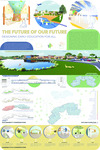
“Disability is a natural part of the human experience and in no way diminishes the right of individuals to participate in or contribute to society” (“About IDEA,” n.d.). Starting from a young age, children strive to be wanted, accepted and included. Elementary schools serve as a launching pad for the rest of everyone's lives. Making sure students, in all capacities, are thought of from the beginning is crucial to successful design. Often, students with learning disabilities are sent to different rooms with different teachers to learn at different rates. What if there was a way to keep all students together and give them equal opportunities? Students with physical disabilities might be given different resources in certain classes because they “cannot” do specific tasks. What if building design helped all students receive the same resources? No one wants to be isolated. Solving the problem of inclusion can be undertaken by understanding universal design.
Recommended Citation
Manstrom, Anne Rebecca, "The Future of Our Future: Designing Early Education for All" (2024). Architecture Theses. 1732.
https://digitalcommons.ndsu.edu/architecture-theses/1732