

Files
Date of Award
2024
Document Type
Thesis
Handle
https://hdl.handle.net/10365/33887
College
Arts, Humanities, and Social Sciences
Department
Architecture
Faculty Advisor
Greub, Charlott
Publisher
North Dakota State University
Rights
NDSU policy 190.6.2
URI
https://www.ndsu.edu/fileadmin/policy/190.pdf
Abstract
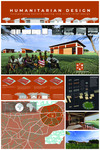
This project is an exploration into understanding the qualities of the built environment to attain a level of dignity for refugees in their healing process. Architecture cannot solve these social issues but seeks to understand the impact of the built environment on individual people. This research will focus on the humanitarian design response method and how it can be improved in the future. Can healing take place through design created by architects and does the design of a refugee camp have anything to do with that healing process? This research will use the global refugee situation as a vehicle to understand humanitarian design response. This research will interrogate global partners that are working towards the goal to support the healing process in refugee camps and understand how this process is approached within those companies and to further gain an understanding if the structure of a camp could influence the ability for people to heal. What if humanitarian design response was something that planners, designer and architects were prepared for, rather than something designers are always trying to catch up with. This research will reveal what strategies have been currently achieved as a humanitarian response in order to uncover any gaps that could provide a holistic solution in the future.
Recommended Citation
Peikert, Matthew, "Healing Through Humanitarian Design: Understanding the Refugee Crisis and Designing for the Future" (2024). Architecture Theses. 1739.
https://digitalcommons.ndsu.edu/architecture-theses/1739
ThesisPresentation_Peikert.pdf (19294 kB)
ThesisSupplement_Peikert.pdf (175 kB)