

Files
Date of Award
5-2026
Document Type
Thesis
Degree Name
Master of Landscape Architecture
College
Arts and Sciences
Department
Landscape Architecture, Disaster Resiliency & Emergency Management (LADREM)
Faculty Advisor
Anna Maria Visilia
Studio Coordinator
Jay Kost
Faculty Chair
Dominic Fischer
Publisher
North Dakota State University
Rights
NDSU policy 190.6.2
URI
https://www.ndsu.edu/fileadmin/policy/190.pdf
Abstract
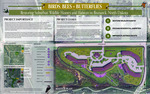
For centuries humanity has been expanding its borders, stretching in and across a wide range of ecosystems, optimizing the land for human use and habitation. Animal-aided design is a possible solution to the loss of habitats; a new methodology of designing green spaces for the use of specific native species. Green spaces are vital to the mental and physical well-being of people, and the presence of native species such as songbirds or butterflies can further increase those benefits. Only 4.2% of North Dakota is developed land, referring to urban and industrial usage, but within these spaces are opportunities to conserve habitats within residential zones. The leading goal of this thesis is to investigate methods of incorporating animal habitats into suburban areas through the renovation of existing builds. The thesis project set three main objectives to lead design development: establish wildlife habitat, retain and provide resident amenities, and enhance the site with a detailed planting plan.
Recommended Citation
Joubert, Elena, "Birds, Bees, + Butterflies: Restoring Suburban Wildlife Homes and Habitats in Bismarck, ND" (2026). Landscape Architecture Theses. 9.
https://digitalcommons.ndsu.edu/landscape-architecture-theses/9
ThesisPresentation_Joubert.pdf (395119 kB)
ThesisSupplement_Joubert.mp4 (508580 kB)