

Files
Date of Award
2022
Document Type
Thesis
Handle
https://hdl.handle.net/10365/32962
Publisher
North Dakota State University
Rights
NDSU policy 190.6.2
URI
https://www.ndsu.edu/fileadmin/policy/190.pdf
Abstract
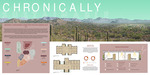
In a world that is rapidly changing due to climate change, there is a group of people that are being left behind in the “green” movement. This is not new for these people; the group has often been forgotten and under served by society throughout history. This group is the chronically ill. With a variety of abilities and needs, society has failed to give them the same opportunities in life as the abled body. Buildings are required to have accessible entrances but often time they are far from the main entrances and highlight a person’s disabilities by inconveniencing not just only the disabled but everyone in their group. Yet, there is even more to accessibility than ADA entrances. Accessibility has many factors such as affordability, access to resources, and usability. This project focuses on how to create a community that is designed for the chronically ill with their various needs and abilities at the forefront of the design while considering the sustainability of the project. Located outside of Phoenix, Arizona within the Sonoran Desert, this project focuses on the ability to create a sustainable community that caters to a demographic that has struggled to become more sustainable due to their additional medical needs. The community will provide for the chronically ill and their families within the master planned community. Amenities include a community center, retail, grocery store, medical facility, athletic facilities, and leisure facilities. The project is divided into two parts: master planning the community and designing key community aspects.
Recommended Citation
Mathiowetz, Nicole, "Chronically Sustainable: Creating a Sustainable Community for the Chronically Ill" (2022). Architecture Theses. 139.
https://digitalcommons.ndsu.edu/architecture-theses/139