

Files
Date of Award
2024
Document Type
Thesis
Handle
https://hdl.handle.net/10365/33882
College
Arts, Humanities, and Social Sciences
Department
Architecture
Faculty Advisor
Wischer, Stephen
Publisher
North Dakota State University
Rights
NDSU policy 190.6.2
URI
https://www.ndsu.edu/fileadmin/policy/190.pdf
Abstract
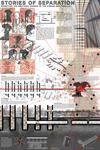
When encountering conditions with unknown aspects, it is an impulse to occupy them with experiences and memories to alleviate the associated feelings and reach a form of understanding. This thesis explores how our understandings are influenced and establish a precedent for architectural interventions to assist in resolving the conditions of the unknown. Following World War II (WWII), the 38th parallel marked the beginning of the separation of the Koreas before it developed into the Demilitarized Zone (DMZ). Contrasting the stagnant characteristics of this physical division, the emotional division in Korea has continuously evolved and shifted throughout the years. Designed in mountains and along the invisible line of the 38th parallel, the architectural experiences draw out an understanding of the emotional border by imparting a lasting influence on people’s perceptions and memories.
Recommended Citation
Nelson, Samuel Lee, "Stories of Separation: Reunifying the Emotional Border of the Korean 38th Parallel" (2024). Architecture Theses. 1737.
https://digitalcommons.ndsu.edu/architecture-theses/1737