

Files
Date of Award
2021
Document Type
Thesis
Handle
https://hdl.handle.net/10365/32873
Publisher
North Dakota State University
Rights
NDSU policy 190.6.2
URI
https://www.ndsu.edu/fileadmin/policy/190.pdf
Abstract
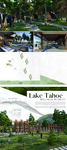
Homeostasis is the self-regulating process by which stability is maintained during the adjustment to conditions. This is similarly seen in how our built environment provides stability to our ever-changing health, wellness, and environment. Utilizing Zero Carbon principles and WELL Building Standards can assist in supporting our built environment to be adaptable to maintain the balance of homeostasis that is desired. By following these standards, the structure that is created should enhance our state of being and improve our sustainability. These factors are extremely prevalent in a society that is overusing resources, overexerting themselves, and underutilizing the power of architecture. The implementations to address these issues can be learned from the research of academic articles, books, and through case studies. A sustainable wellness retreat is an architectural solution that can be a catalyst into other projects that support our wellness, health, and environment. The retreat will focus on homeostasis within our health, wellness, and environment by maximizing the design of our built environment.
Recommended Citation
Sundberg, Grace, "Homeostasis" (2021). Architecture Theses. 230.
https://digitalcommons.ndsu.edu/architecture-theses/230