

Date of Award
2021
Document Type
Thesis
Handle
https://hdl.handle.net/10365/32888
Publisher
North Dakota State University
Rights
NDSU policy 190.6.2
URI
https://www.ndsu.edu/fileadmin/policy/190.pdf
Abstract
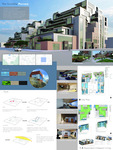
The concept I chose for my thesis project is a unifying idea focused on community healing and more specifically on helping people in extreme poverty or homelessness. It seems that there is a sizable disconnect in understanding why people are homeless, and I believe it is much more effective to look at the source of the problem than to deal with the outcome. The public view is often unapologetic, and many people are quick to blame those facing homelessness for their bad habits or perceived irresponsibility. I believe it is very problematic to view people suffering from this issue through this lens, and often people are judged due to these biases. Societal prejudice in turn leads to chronic homelessness for many. I primarily want to offer these people shelter through my design, but I also want my project to offer services that allow these individuals to heal and grow. I want to provide some sort of public involvement in the project. What can I design to educate people about our homelessness crisis and the individuals affected? Sustainable practices are a priority for me to minimize facility costs in the long run, and I believe green spaces can play a significant role in rehabilitation. Interior spaces will be focused on creating a healthy and safe environment for patrons.
Recommended Citation
Leake, Matthew, "The Invisible Person" (2021). Architecture Theses. 284.
https://digitalcommons.ndsu.edu/architecture-theses/284