

Files
Date of Award
5-2025
Document Type
Thesis
Degree Name
Master of Architecture
College
Arts and Sciences
Department
Architecture
Faculty Advisor
Ganapathy Mahalingam
Studio Coordinator
Stephen Wischer
Faculty Chair
Susan Kliman
Publisher
North Dakota State University
Rights
NDSU policy 190.6.2
URI
https://www.ndsu.edu/fileadmin/policy/190.pdf
Abstract
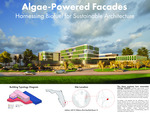
This thesis explores the integration of biophilic systems into a sustainable office building in Deerfield Beach, Florida. The project demonstrates how these systems can generate renewable energy, sequester carbon, and enhance environmental performance. Calculations revealed that the algae façade, producing 80 grams of biomass per square meter daily, offsets approximately 20% of the building’s annual energy consumption through biofuel conversion. The green roof not only contributes to carbon sequestration but also harvests rainwater to support algae cultivation. Using Excel for initial energy calculations and the Revit BIM model for advanced analysis, this research provides a replicable framework for integrating energy generating biophilic systems in urban architecture. The study advances sustainable design by showcasing how architecture can actively produce renewable energy, improving both building efficiency and environmental impact.
Recommended Citation
Weber, Ethan Ahlstrand, "Algae-Powered Facades: Harnessing Biofuel for Sustainable Architecture" (2025). Architecture Theses. 29.
https://digitalcommons.ndsu.edu/architecture-theses/29
ThesisPresentation_Weber.pdf (7981 kB)
ThesisSupplement_Weber.pdf (4429 kB)