

Date of Award
2015
Document Type
Thesis
Handle
https://hdl.handle.net/10365/25225
Publisher
North Dakota State University
Rights
NDSU Policy 190.6.2
URI
https://www.ndsu.edu/fileadmin/policy/190.pdf
Abstract
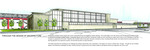
Philosopher Jonathan Powers argues that current culture and society are engaging a utopian ideology. This model began in the 16th century when the educational system sought to reduce all knowledge to eidetic (visual) content. At this time, figures such as Tommaso Campanella created top down educational models which boxed out the importance of learning through our experience of the world. Recently, this universal model of education has been criticized by many, including Hannah Arendt, who claim that the current autonomous learning approach only responds to politics, and that learning does not equal education. This thesis examines how architecture can challenge the existing machine-like view of education in the design of a school and community arts center in Wicker Park, Chicago. Through the use of diffuse spaces that engage the peripheral aspects of consciousness, the architecture challenges the clear, surface thinking of a typical school and instead creates an atmosphere where the imagination can come to life.
Recommended Citation
Klindworth, Amy, "Living utopia : challenging education as a machine through the design of architecture" (2015). Architecture Theses. 358.
https://digitalcommons.ndsu.edu/architecture-theses/358