

Date of Award
2021
Document Type
Thesis
Handle
https://hdl.handle.net/10365/32867
Publisher
North Dakota State University
Rights
NDSU policy 190.6.2
URI
https://www.ndsu.edu/fileadmin/policy/190.pdf
Abstract
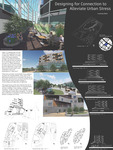
Today, it is estimated that over half of the world’s population are living in urban areas. With the ever-rising totals of the human population locating to the urban environment, the effects that the built environment has on well-being is more relevant now than ever. While urbanization has been a positive force in economic growth & opportunity, living in such dense areas also poses major social ramifications such as the manifestation of “urban stress”. Urban stress can lead to uncomfortable living conditions & greater risk of health problems. Some causes of this phenomenon include but are not limited to the absence of green space, lack of access to services & activities, & poor quality housing which can lead to feelings of overcrowding, social deprivation, depression. This project focuses on the stress-reduction that may be achieved through different avenues of community-based activity: living, learning, working, & socializing. Another key aspect to this building’s design is the integration of green spaces throughout. It is through these connections to community & nature that people may destress, reenergize, & re-focus.
Recommended Citation
Skare, Courtney, "Designing for Connection to Alleviate Urban Stress" (2021). Architecture Theses. 421.
https://digitalcommons.ndsu.edu/architecture-theses/421