

Files
Date of Award
2022
Document Type
Thesis
Handle
https://hdl.handle.net/10365/32979
Publisher
North Dakota State University
Rights
NDSU policy 190.6.2
URI
https://www.ndsu.edu/fileadmin/policy/190.pdf
Abstract
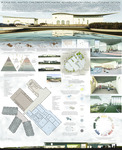
Mental health is a state of psychological, emotional, and social wellbeing that can have a variety of difficulties that affect the daily function of a person. Mental illness is a persistent problem, with the most frequent anxiety disorders being generalized, social, panic, and depression. These illnesses may affect anyone, regardless of background especially children. Because of the influence on the transition to maturity, focusing on children’s mental health is extremely important. The National Mental Health Act was established in 1946, making the psychological well-being of the people a federal priority. It highlighted research aimed at dramatically improving diagnosis and treatment options. Architecture evolves in tandem with society’s social requirements. These new public values lead to the development of children’s mental health centers. The paradigm shift we hoped for has taken a long time to arrive, and it brings with it new strategies of architecture. One of these new ways is salutogenic design, which is defined as a method that prioritizes the support of human health and well-being. The main goal of this project is to show how salutogenic design can have a positive influence on youths' mental health through the built environment. The building's architecture will incorporate natural links with nature and how children might benefit in the healing process, particularly for young people.
Recommended Citation
Taylor, Eva, "Please Feel Invited: Children's Psychiatric Rehabilitation Using Salutogeneic Design" (2022). Architecture Theses. 455.
https://digitalcommons.ndsu.edu/architecture-theses/455