

Date of Award
2022
Document Type
Thesis
Handle
https://hdl.handle.net/10365/32922
Publisher
North Dakota State University
Rights
NDSU policy 190.6.2
URI
https://www.ndsu.edu/fileadmin/policy/190.pdf
Abstract
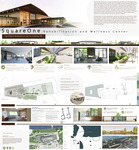
Traumatic Brain Injury, TBI, is an injury that affects how the brain works. These injuries may impact individuals’ behavior, mobility, memory, language, problem solving and empathy. TBI patients also tend to feel isolated because cognitive, physical, and social disabilities prevent them from engaging in their pre-injury activities in a normalized way. Depending on how severe one’s injuries may be, one may recover from a traumatic brain injury. However, most will live with permanent effects from their injuries. Recovery at any level may involve years of relearning how to do daily tasks. Throughout a TBI survivor’s recovery process, they will need substantial support to learn, live and work with their disability. Healthcare professionals along with community, family and friends can help the survivor regain confidence when returning to the outside world to live and work with their disability. Through design, innovative rehabilitation methods are combined with connections to nature and community to create a holistic and supportive atmosphere for patients to recover from their traumas in this facility. A focus on overall community health and wellness is also provided to benefit a wider population and create space for interaction between TBI patients and the community to assist in breaking stigmas. TBI survivors, family, friends and the broader community will be able to interact and learn in an environment that encompasses whole body wellness.
Recommended Citation
Dietrich, Emma, "Square One Rehabilitation and Wellness: The Effects Architecture Has on Treating TBI" (2022). Architecture Theses. 474.
https://digitalcommons.ndsu.edu/architecture-theses/474