

Files
Date of Award
5-2026
Document Type
Thesis
Degree Name
Master of Architecture
College
Arts and Sciences
Department
Architecture
Faculty Advisor
Charlott Greub
Studio Coordinator
Stephen Wischer
Faculty Chair
Susan Kliman
Publisher
North Dakota State University
Rights
NDSU policy 190.6.2
URI
https://www.ndsu.edu/fileadmin/policy/190.pdf
Abstract
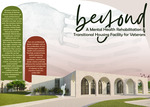
For many United States veterans, the transition home is not a return to stability, but the beginning of a new and often unseen mental health challenges. This thesis explores the role of architecture in supporting the recovery and reintegration of United States veterans facing mental health challenges and homelessness. Existing mental health and transitional housing facilities are often sterile and institutional, overlooking the impact of the built environment on psychological well-being. This project proposes a combined transitional housing and mental health rehabilitation facility designed to reduce the stigma of veterans needing help, promote stability, and help reintegrate them into a healing community. Through research and interviews with veterans and healthcare professionals, key design strategies were identified, including trauma-informed sequencing of space, acoustic control, natural ventilation, and the application of biophilic design criteria. The proposed facility design integrates these principles to promote safety, trust, and healing, preventing re-traumatization by prioritizing psychological and emotional safety. Creating an environment that supports sensory regulation, autonomy, and social connection. By using architecture as an active therapeutic tool, this thesis demonstrates how design can enhance mental health outcomes and promote autonomy in healing.
Recommended Citation
Hamman, Alexandria, "Beyond the Battlefield: Architecture as a Path to Veteran Recovery" (2026). Architecture Theses. 63.
https://digitalcommons.ndsu.edu/architecture-theses/63