

Date of Award
2023
Document Type
Thesis
Handle
https://hdl.handle.net/10365/33163
Publisher
North Dakota State University
Rights
NDSU policy 190.6.2
URI
https://www.ndsu.edu/fileadmin/policy/190.pdf
Abstract
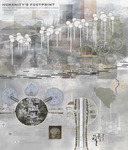
The climate is changing, there is no doubt about that. Past and present practices are not enough, we need to change now. This excerpt gives an adequate explanation on the dire need for change, “Human experience and memory offer no good analogy for how we should think of those thresholds, but, as with world wars or recurrences of cancer, you don’t want to even see one. [talking about the degrees Celsius the earth warms on average] At two degrees, the ice sheets will begin their collapse, 400 million more people will suffer from water scarcity, major cities in the equatorial band of the planet will become unlivable, and even in the northern latitudes heat waves will kill thousands each summer. There will be thirty-two times as many extreme heat waves in India, and each would last five times as long, exposing ninety-three times more people. This is our best-case scenario” (David Wallace-Wells, 2019). The paragraph continues to lay out each degree and the effects it will have and with each degree living on earth gets increasingly more challenging. These challenges make climate change a topic that a lot of people struggle to make the much needed changes or wrap their heads around the severity. Climate change is many different factors wrapped up into a huge issue, it’s also not right in front of our faces. If you come across a large puddle, you make a quick decision, jump over the puddle, walk around or step in the puddle. This is a threat that is right in front of us whereas the changes we see as an effect of climate change are slow moving and do not always pop right in front of our faces. These challenges will be laid out and addressed through a design project forced to acknowledge the effects of climate change, the ever changing earth, and the people who habitat the earth.
Recommended Citation
Ponto, Elizabeth, "Humanity's Footprint: Tracing the Devastating Effects of Climate Change Through Time" (2023). Architecture Theses. 646.
https://digitalcommons.ndsu.edu/architecture-theses/646