

Date of Award
2021
Document Type
Thesis
Handle
https://hdl.handle.net/10365/32884
Publisher
North Dakota State University
Rights
NDSU policy 190.6.2
URI
https://www.ndsu.edu/fileadmin/policy/190.pdf
Abstract
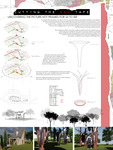
In a lot of cities, there seems to be districts that appeared to be struggling financially and there is a stigma around those areas that no one would want to live there. The housing usually looks subpar and does not fit in with the other “higher up” neighborhoods. These districts are usually located in what we call Red Line Districts and not many people know exactly what this is and how it started. Red lining is from back in the 1950s and is a major contributor to the reason why nonwhites (mainly African Americans) struggle to obtain permanent housing that increases their wealth. There is a dramatic divide shown between the wealth of whites and nonwhites and this stems back to the was (what is this?) of housing in American cities. With such a big divide and negligence of higher up interference, I question how can the lives of the people in districts like these move up in America? My thesis will educate readers on the housing crisis in the U.S. in efforts to open the eyes of everyone on the silent killer of a primary demographic. A solution will be provided that creates affordable housing that is seamlessly integrated within more developed districts by focusing on sustainable resources for the houses to use. The idea behind Red Lining will be reconstructed for not only 20 years down the line but in the immediate future proving that neighborhoods can be lifted from the downward spiral they were put in by the government all too many years ago.
Recommended Citation
Boateng, Linda, "Cutting the Red Tape" (2021). Architecture Theses. 651.
https://digitalcommons.ndsu.edu/architecture-theses/651