

Date of Award
2021
Document Type
Thesis
Handle
https://hdl.handle.net/10365/32876
Publisher
North Dakota State University
Rights
NDSU policy 190.6.2
URI
https://www.ndsu.edu/fileadmin/policy/190.pdf
Abstract
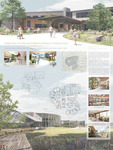
How can architecture improve the health and well-being of students in the learning environment? Can we as designers use the Montessori child-focused approach to learning and apply it to architecture for children’s education? How can design focus on child growth in all areas of their development, such as cognitive, emotional, social, and physical? Components necessary for a program to be considered authentically Montessori include multiage groupings that foster peer learning, uninterrupted blocks of work time, and guided choice of work activity. In addition, a full complement of specially designed Montessori learning materials are meticulously arranged and available for use in an aesthetically pleasing environment. This thesis aims to encourage independence, freedom within limits, and a sense of order. The child, through individual choice, makes use of what the environment offers to develop themself. This organization of information—facts and figures—prepares the child for the world of adolescence, when thought and emotion evolve into understanding more abstract, universal concepts such as equity, freedom, and justice.
Recommended Citation
Nagel, Jennifer, "Designing for the Montessori Method of Education" (2021). Architecture Theses. 693.
https://digitalcommons.ndsu.edu/architecture-theses/693