

Files
Date of Award
2024
Document Type
Thesis
Handle
https://hdl.handle.net/10365/33864
Publisher
North Dakota State University
Rights
NDSU policy 190.6.2
URI
https://www.ndsu.edu/fileadmin/policy/190.pdf
Abstract
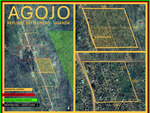
With an ever-increasing number of displaced people, the world has seen a constant need for basic human necessities such as food, water, and shelter. Refugee camps are intended to be necessary, quick solutions to house displaced people. However, many camps can turn into human storage facilities and living conditions can feel like a prison. Tradition and culture are often overlooked when setting up refugee camps. Over time, the refugee camp may evolve into a more permanent settlement. How can we guide the hyper-modern urban evolution of a refugee camp into a more sustainable, culturally sensitive refugee settlement? My thesis explores the line between modern and vernacular urbanism and proposes a solution that provides order, sustainability, and scalability while also taking a close look at the culture of South Sudanese refugees in the Agojo Refugee Settlement located in Northern Uganda. This thesis explores a more vernacular and sustainable approach to urbanism as a refugee camp becomes a settlement.
Recommended Citation
Meidinger, Jacob Jay, "The Refugee Camp Evolved: Hyper-Modern Urbanism vs. Vernacular Urbanism" (2024). Architecture Theses. 822.
https://digitalcommons.ndsu.edu/architecture-theses/822