

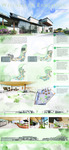
Date of Award
2022
Document Type
Thesis
Handle
https://hdl.handle.net/10365/32917
Publisher
North Dakota State University
Rights
NDSU policy 190.6.2
URI
https://www.ndsu.edu/fileadmin/policy/190.pdf
Abstract
Universally children are sent to attend school to gain basic knowledge in most communities. In the United States the standard is about 7 hours a day, 5 days a week, for 13 years. These educational institutions that are in place have a strong impact on the growth and development of young individuals. Many schools are historical or show strong elements that speak to the time they were built. These elements include architectural style, classroom size, amounts, and types, and systems within the building. As communities grow from the framework in which the school was originally constructed, there lies the opportunity to be more intentional with updates and redesign. To foster intellectual growth, those who attend need to have the ability to grow mentally and emotionally. Creating safe spaces for the youth aids the cultivation of skill sets needed for success and well-being. Moving forward, schools need to be places of relief and positive stimulation. Green building design, incorporating WELL building standards, using space psychology, connecting the school’s surroundings to their environment, and ensuring safety are all strong goals to create more positive learning environments. These positive learning environments will encourage focus, exploration, and collaboration of ideas and learning.
Recommended Citation
Carpenter, Carol, "Wellness in Educational Facilities" (2022). Architecture Theses. 888.
https://digitalcommons.ndsu.edu/architecture-theses/888