

Files
Date of Award
5-2026
Document Type
Thesis
Degree Name
Master of Architecture
College
Arts and Sciences
Department
Architecture
Faculty Advisor
Regin Schwaen
Studio Coordinator
Stephen Wischer
Faculty Chair
Susan Kliman
Publisher
North Dakota State University
Rights
NDSU policy 190.6.2
URI
https://www.ndsu.edu/fileadmin/policy/190.pdf
Abstract
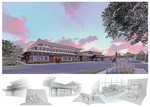
Mental health is how a person’s psychological and social well-being affects their ability to cope with stress and contribute to society. Mental health disorders can manifest children typically worsen and become more difficult to treat as they age. Treating mental health disorders as soon as symptoms emerge allows for optimal treatment. Environment facilitates the worsening or improvement of mental health. A patient’s environment could be manipulated to promote treatment of mental health disorders. The built environment cannot heal anyone’s mental health alone, but there are several ways in which design can positively contribute to the healing process. Creating a holistic, regenerative, and calming environment is essential to successful psychotherapy treatment. This thesis explores strategies that decrease the sterile feel of the environment while promoting a sense of homeliness, incorporating elements of daylighting and access to nature, creating a sense of control through personalization of treatment spaces, and ensuring occupant safety.
Recommended Citation
Olson, Ashley, "The Built Environment Effects on Pediatric Mental Health" (2026). Architecture Theses. 91.
https://digitalcommons.ndsu.edu/architecture-theses/91