

Files
Date of Award
5-2026
Document Type
Thesis
Degree Name
Master of Landscape Architecture
College
Arts and Sciences
Department
Landscape Architecture, Disaster Resiliency & Emergency Management (LADREM)
Faculty Advisor
Craig Larson
Studio Coordinator
Jay Kost
Faculty Chair
Dominic Fischer
Publisher
North Dakota State University
Rights
NDSU policy 190.6.2
URI
https://www.ndsu.edu/fileadmin/policy/190.pdf
Abstract
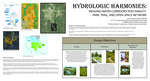
This thesis investigates how Fargo’s river corridors can be redesigned as connected, multi-functional public landscapes that strengthen community access, expand recreational opportunities, and support nature-based education. Although the Wild Rice and Red Rivers shape the city’s identity, decades of flood-control infrastructure and fragmented access have limited the public’s relationship with these waterways. As Fargo continues to grow and adapt to changing hydrologic conditions, the need for resilient, accessible, and educational riverfront spaces has become increasingly urgent.
Using a mixed-method approach that integrates literature review, precedent analysis, GIS-based site assessment, and iterative design exploration, this project develops a framework for reconnecting residents to the river through a system of trails, access points, play environments, and ecological learning zones. Precedents in resilient park design and hillside adventure play inform strategies for shaping topography, managing flood dynamics, and creating immersive educational experiences within the floodplain.
The resulting design proposes a connected river loop that links neighborhoods, enhances recreational diversity, and interprets the ecological processes of the floodplain. By combining resilience principles with community-oriented programming, the project demonstrates how riverfront landscapes can function simultaneously as infrastructure, public space, and outdoor classroom. The thesis contributes a replicable model for cities seeking to transform flood-impacted corridors into resilient, engaging, and educational public landscapes.
Recommended Citation
Janssen, Isaac, "Hydrologic Harmonies: Weaving Water Corridors Into Fargo's Park, Trail, and Open Space Network" (2026). Landscape Architecture Theses. 20.
https://digitalcommons.ndsu.edu/landscape-architecture-theses/20
ThesisPresentation_Janssen.pdf (509546 kB)
ThesisSupplement_Janssen.mp4 (157946 kB)