

Files
Download Full Text (7.5 MB)
Download download (5.8 MB)
Download download (354.1 MB)
Download download (27.8 MB)
Download download (33.9 MB)
Download download (5.9 MB)
Download download (41.4 MB)
Download download (383 KB)
Download download (53.9 MB)
Download download (5.3 MB)
Download download (4.6 MB)
Download download (5.2 MB)
Download download (5.7 MB)
Download download (5.9 MB)
Download download (5.6 MB)
Download download (4.8 MB)
Download download (6.7 MB)
Download download (7.5 MB)
Download download (5.7 MB)
Download download (661 KB)
Download download (658 KB)
Download download (628 KB)
Download download (29.0 MB)
Date of Award
2018
Document Type
Thesis
Handle
https://hdl.handle.net/10365/28174
Publisher
North Dakota State University
Rights
NDSU Policy 190.6.2
URI
https://www.ndsu.edu/fileadmin/policy/190.pdf
Abstract
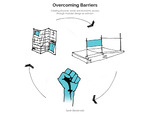
10% of the population has difficulty using stairs; most due to a wheelchair, cane, crutches, or walker. That is about 24,000 people in the Fargo-Moorhead area alone. In today’s built environment there are exceptions within ADA codes allowing buildings constructed prior to the enactment of the codes to remain exempt if renovation is not “readily achievable”- easily accomplished and able to be carried out without much difficulty or expense. Everyone deserves dignity, confidence, and access to the same experience while in our built environment. Many building entrances are not accessible, if they are, it is by a secondary entrance. This ‘separate but equal’ mentality segregates able and non-able bodies. How can we change current social norms about disability? I created access into existing buildings through a modular installation that is easy to assemble, afford, replicate, and made with minimal waste. This design is, by the code definition, ‘readily achievable’ for business owners. If we use our voices and question the status quo we will be agents for equal access. Making this problem visible to the public will incentivize the building owners that have an inaccessible entry to take a step towards inclusion. Change happens when we come together as a community and demand it.
Recommended Citation
Biesterveld, Sarah, "Overcoming Barriers: Creating Physical, Social, and Economic Access through Modular Design as Activism" (2018). Architecture Theses. 213.
https://digitalcommons.ndsu.edu/architecture-theses/213
download (362594 kB)
download (28441 kB)
download (34739 kB)
download (6042 kB)
download (42386 kB)
download (383 kB)
download (55143 kB)
download (5457 kB)
download (4705 kB)
download (5370 kB)
download (5823 kB)
download (6027 kB)
download (5742 kB)
download (4906 kB)
download (6910 kB)
download (7643 kB)
download (5789 kB)
download (661 kB)
download (658 kB)
download (628 kB)
download (29678 kB)