

Files
Date of Award
5-2026
Document Type
Thesis
Degree Name
Master of Architecture
College
Arts and Sciences
Department
Architecture
Faculty Advisor
Ganapathy Mahalingam
Studio Coordinator
Stephen Wischer
Faculty Chair
Susan Kliman
Publisher
North Dakota State University
Rights
NDSU policy 190.6.2
URI
https://www.ndsu.edu/fileadmin/policy/190.pdf
Abstract
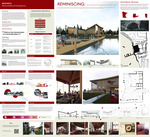
This research explores the relatively unknown intersection of human memory and architectural design to determine the characteristics of a memorable place. Through synthesis of psychological literature on memory and architectural theory, in conjunction with case study analysis, a “Hypothetical Memorability Network" was established. Within this network, five psychological characteristics act in sequence to provide the necessary tools for creating a long-term episodic memory: attention, emotion, place, meaning, and story.
These psychological characteristics were developed into a Memorable Design Framework to be used as a guide to creating memorable architectural projects. Testing the design framework, the research found is applied to a restaurant design in the North Shore town of Grand Marais, Minnesota. The project serves as an example of integrating novel stimuli, emotional resonance, strong site connection, deeper meaning, and a narrative driven design to demonstrate how an architectural design can push beyond the generic realm into the memorable.
Recommended Citation
Vetsch, Ryann, "Reminiscing: Architectural Impressions That Last" (2026). Architecture Theses. 78.
https://digitalcommons.ndsu.edu/architecture-theses/78
ThesisPresentation_Vetsch.pdf (47540 kB)
ThesisSupplement_Vetsch.pdf (5132 kB)