











-
Flood Resilient Architecture: Planning for Global Warming Flooding in the San Francisco Bay
Darek Steffan
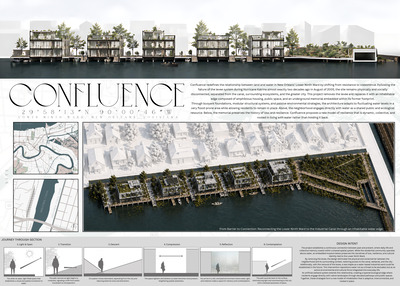
The global warming crisis is threatening global cities, with rising waters. Rising water can threaten people’s lives and property. Without direct action and forward thinking in the architecture profession the built environment will be in danger. Floating and amphibious architecture options should be explored as a new way for low-income residents. This proposal will explore options in San Francisco, California, an area that has experienced flooding, and will face rising waters if the climate crisis is not solved. Modularity for easy construction and low costs will be explored.
-
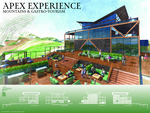
Apex Experience: Mountains and Gastro-Tourism
Mataiah Turner
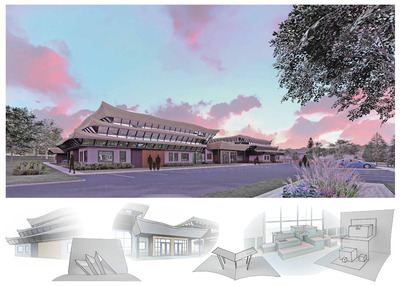
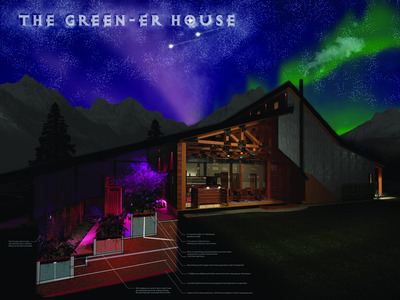
This thesis addresses the underutilization of the top of the mountain located at Park City, Utah due to an existing restaurant that is characterized by outdated architecture, minimal space, and seasonal closures. To maximize the full potential that the site has for user experience, a new restaurant concept, The Apex, was designed. The Apex is a multi-faceted restaurant designed to allow for multiple dining experiences, views, and a place to rest. By capturing the panoramic views, utilizing alpine architecture to blend with mountain landscape, and catering to the many mountain adventurers, The Apex becomes a beacon within the mountain that effectively blends gastronomy, relaxation, and nature.
-
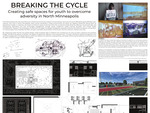
Breaking the Cycle: Creating Safe Spaces for Youth to Overcome Adversity in North Minneapolis
Anthony Vergara Gonzalez
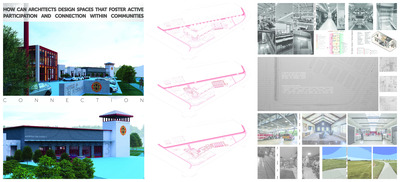
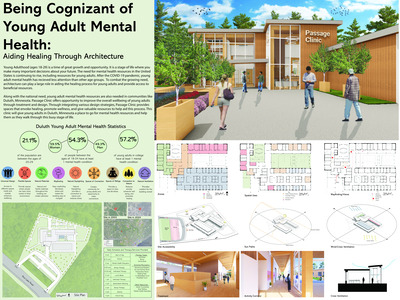
This thesis investigates how architecture can foster community cohesion and provide refuge for youth impacted by gang affiliation, gun violence, and crime. By offering an empowering alternative through sports, academics, trades training, donation, and mental health support, the design becomes a catalyst of change. Rooted in the philosophy of otherness and edges, the spatial arrangement separates selective and collective zones, unifying them in a central space that embodies the flesh concept, a reconciliation of division and unity. An accompanying artefact projects dual community narratives of struggle and resilience onto a suspended canvas, inviting viewers to confront the edge between alienation and belonging. This interplay between space and story challenges the audience to engage with both physical and symbolic borders. Through these layered approaches, the project reimagines architecture as a transformative agent- bridging divides, encouraging reflection, and cultivating empowerment within North Minneapolis.
-
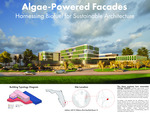
Algae-Powered Facades: Harnessing Biofuel for Sustainable Architecture
Ethan Ahlstrand Weber
This thesis explores the integration of biophilic systems into a sustainable office building in Deerfield Beach, Florida. The project demonstrates how these systems can generate renewable energy, sequester carbon, and enhance environmental performance. Calculations revealed that the algae façade, producing 80 grams of biomass per square meter daily, offsets approximately 20% of the building’s annual energy consumption through biofuel conversion. The green roof not only contributes to carbon sequestration but also harvests rainwater to support algae cultivation. Using Excel for initial energy calculations and the Revit BIM model for advanced analysis, this research provides a replicable framework for integrating energy generating biophilic systems in urban architecture. The study advances sustainable design by showcasing how architecture can actively produce renewable energy, improving both building efficiency and environmental impact.
-
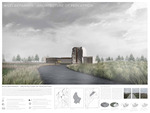
Wuelbefannen: Architecture of Perception
Enya Weinandt
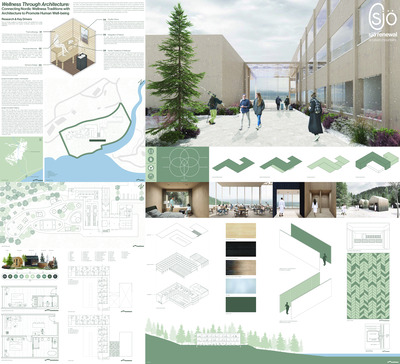
This thesis explores how architectural design can positively challenge human and user perception to promote mindfulness and relaxation. Set in Luxembourg City, the study explores the intersection of the phenomenology of perception, metaphysics, and architecture, specifically space and time. It examines how sensory and spatial elements can be manipulated to create environments that transcend conventional experiences. The research includes theories of perception and metaphysics, as well as research about sensory design as a framework for designing spaces that engage with existential and experiential dimensions beyond the five senses. The project's design project will be a spiritual retreat, applying these concepts to create an environment for mindfulness practice. This work aims to contribute to the dialogue between philosophy and architecture, offering insights into designing spaces that foster well-being and deeper connections between individuals and their environment.
-
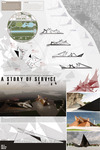
A Story of Service: Thoughts on Commemorative Architecture and the Anti-Monument
Cody D. Williamson
United States service members and their courageous actions have been the subject of countless monuments and memorials. Most of these are dedicated to events of the past. Never has design told a story about current military members and some of the unseen battles they fight on a regular basis. This thesis will seek to understand individual and communal memory faculties as well as learn from contemporary artistic expressions that focus on the recall of the past. The anti-monument will serve as a case study and combine with these insights to create a memorial that is dedicated to soldiers who have lost their lives to suicide. It will serve as an acknowledgment of a silent adversary that the armed services have been at war with for decades. The architecture will seek to remember what most want to forget and share a story of service that is seldom recognized.
-
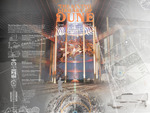
The Living Library of Dune
Josey W. Wilson
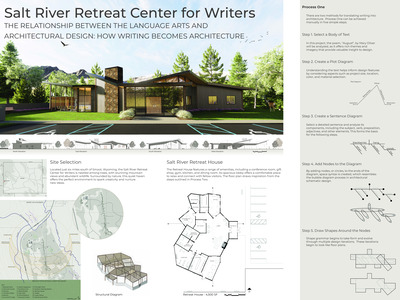
This thesis investigates how language – as a natural, poetic force – can serve as a generative tool in architectural design. It argues that architecture must reclaim its mythopoetic roots, and that through the reintegration of narrative and literary language, built space can once again become a vessel for memory, cultural identity, and transformation.
As both a method and muse, Frank Herbert’s Dune becomes the central literary source for my resulting architectural design. This subjective translation takes form in The Living Library of Dune, a project located in Tacoma, Washington.
The final design of this thesis does not simply present a building, but an argument: that architecture must speak poetically once again. That to dwell is to dwell in language. Only by remembering our role as the storytelling being can we shape a future that endures, not through material permanence alone, but through meaning, and through the stories that unfold within it.
-
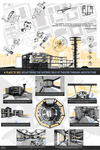
A Place to See: Recapturing the Historic Role of Theatre Through Architecture
Timothy Wren-Bjugstad
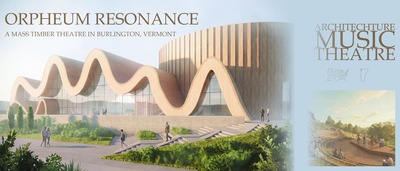
This thesis examines how we can design theatres to start to encourage audience participation and reclaim the theatres purpose as a seeing place. Through the analysis of theatre’s history from Greece to present day, the works of various theatre thinkers, an examination of a variety of theatrical works, and a synthesis of all the above this thesis presents a theatre design that brings theatres function back to its origins.
-
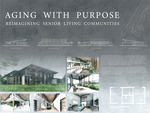
Aging With Purpose: Reimagining Senior Living Environments
Philip Wyganowski
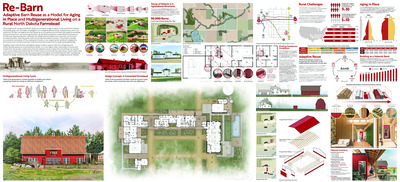
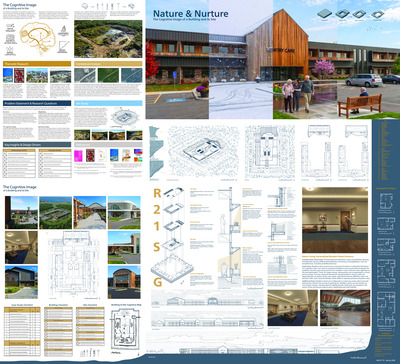
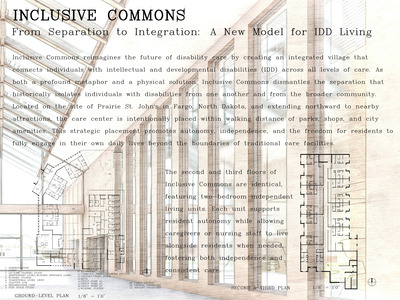
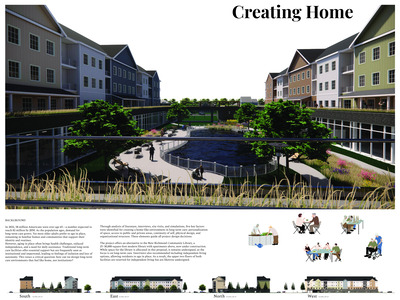
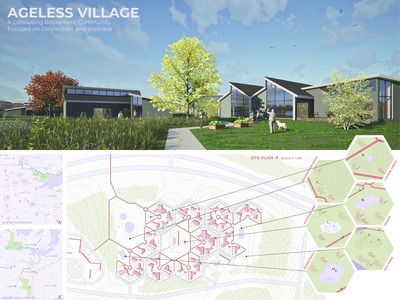
This thesis explores the design and development of living environments for the elderly, focusing on enhancing their quality of life through thoughtful architecture, community engagement, and sustainable practices. As populations age and increase, the need for specialized environments that cater to the unique needs of the elderly has become increasingly pressing. However, current assisted living facilities often fail to provide dignified living environments and can lead to social isolation. The research investigates how designing with intent, through philosophy and meaningful spaces can revolutionize senior living, management, and engagement. By incorporating these elements there is an enhancement of not only the aesthetic appeal of living spaces but also the physical and mental well-being of residents. The central research question driving this exploration is: How can living environments promote dwelling and social engagement for the elderly? The project aims to create a model for an elderly center that integrates aesthetic design, sustainable practices, and biophilic elements. By focusing on the physical, emotional, and social needs of elderly residents, this research contributes to addressing the pressing issue of specialized housing for an aging population and creates a model for others to follow, designing for dwelling rather than efficiency.
-
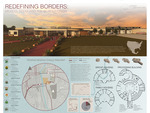
Redefining Borders: Mexico, Texas, and the Border Crisis
Emily Maria Zaragoza
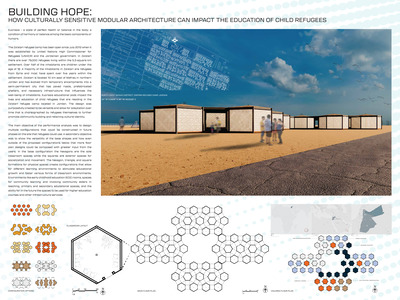
This thesis explores how humane design can improve the migrant detention experience at the U.S. – Mexico border. Located in Eagle Pass, Texas, the project addresses the ongoing border crisis by proposing a new kind of entrance point. This border crossing will prioritize dignity, safety, and support for both migrants and government staff. Through circular floor plans, natural materials, natural light, and shared outdoor spaces the design challenges the typical cold nature of detention centers. Rather than focusing on politics, the project aims to redefine how we design for migrants, how we think about them, and how we take care of our government workers. This thesis is meant to advocate for a built environment that respects human rights and meets basic human needs.
-
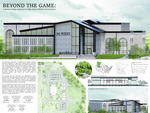
Beyond the Game: A Holistic Design Approach to High School Athletic Environments
Haddey Zastrow
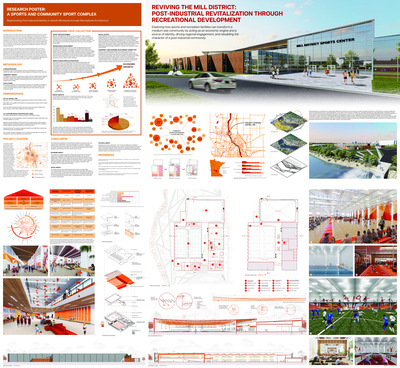
This thesis investigates the critical role of architectural design in supporting the well-being, mental health, and academic performance of high school student-athletes as they navigate the complex intersection of academic and athletic responsibilities. Recognizing the unique challenges faced during the transition between student and athlete roles, the research explores how thoughtfully designed sports recreation and rehabilitation centers can foster holistic development. The study emphasizes the importance of integrating mental health resources, sustainable practices, and user-centered design elements-such as natural lighting, open spaces, and calming colors-to create environments that enhance both physical and psychological well-being. Through a comprehensive analysis of existing literature, behavioral research, and case studies of exemplary sports facilities, the thesis identifies key architectural strategies that address time management, stress reduction, and the balance between academic and athletic commitments. The proposed design framework prioritizes functionality, safety, inclusivity, and sustainability, aiming to set new standards for sports facility design that empower student-athletes to thrive on and off the field. Ultimately, this research aspires to inform the development of innovative, supportive, and sustainable environments that promote resilience, academic success, and lifelong well-being for the next generation of student-athletes.
Printing is not supported at the primary Gallery Thumbnail page. Please first navigate to a specific Image before printing.